Average Reviews:

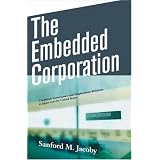
(More customer reviews)Are you looking to buy The Embedded Corporation: Corporate Governance and Employment Relations in Japan and the United States? Here is the right place to find the great deals. we can offer discounts of up to 90% on The Embedded Corporation: Corporate Governance and Employment Relations in Japan and the United States. Check out the link below:
>> Click Here to See Compare Prices and Get the Best Offers
The Embedded Corporation: Corporate Governance and Employment Relations in Japan and the United States ReviewJapan is no longer in fashion among management specialists. This presents several advantages. Only the best research gets published. Authors have to find new and interesting angles. They are compelled to take a comparative perspective. And due to the wealth of accumulated research findings, they stand on the shoulders of giants.One giant in the field of comparative analysis is the British social scientist Ronald Dore. In a way, all scholars working on the Japanese corporation are indebted to him. Sanford Jacoby, now a professor of management in the Anderson School at UCLA, remembers coming across British Factory, Japanese Factory in the library of the Institute of International Relations while a graduate student at Berkeley. Then, as now, PhD candidates in economics were advised against reading articles outside the discipline, and reading books was considered a waste of time, as valid research invariably took the form of articles published in academic journals.
But Dore's book opened the author's mind "to the possibility that, along with the usual universalist factors considered by economists, market institutions were produced by contingencies of time and place." And although the author didn't become a Japan scholar (mastering the language was deemed too time consuming), that encounter with what is known today as the "varieties of capitalism" approach determined his whole research career. As he states in the preface of The Embedded Corporation, "the idea that history and society matter--that a rational, economic entity like the corporation is embedded in the particularities of time and place--informs the analyses presented in this book."
Recently, Ronald Dore has turned his research to a more militant line of thought. Building on years of observation, he argues that Japanese and American large corporations take opposite approaches on the core corporate governance question of who owns the company. Japan has a type of stakeholder welfare system that gives weight to the concerns of employees and other groups, whereas U.S. governance cedes sovereignty to shareholders alone. Welfare capitalism is on the defensive against the inroads of stockmarket capitalism, and the fascination with the US model threatens to unravel the institutions of the Japanese model.
A more nuanced picture emerges from The Embedded Corporation, which compares corporate governance and employment relations in Japan and the United States across time and across sectors. In the United States, the prevalence of shareholder-oriented governance is a rather recent phenomenon, and employees were not always considered as a cost to be minimized. For example, Jacoby argues that, by the 1950s, U.S. society was viewing a "good" employer as "one who treated employees as members of the enterprise and provided them with economic security and fair treatment". He also cites a study prepared in the 1950s, which reported that many corporate managers in the United States claimed that "stockholders have no special priority; they are entitled to a fair return on their investment, but profits above a `fair' level are an economic sin".
Reflecting this viewpoint, HR departments in many U.S. companies did not always stood at the bottom of the managerial hierarchy. The author shows that "when there are labor shortages, new laws to comply with, or threats from unions--that is, when the external environment creates uncertainty--personnel managers have found themselves in relatively powerful positions, with substantial budgets and a role in strategic decisions." But these have been rare moments: "when the external environment has been stable and predictable, personnel management has usually been low man--or low woman--on the corporate totem pole".
By contrast, in Japan "the HR function ranks relatively high in the corporate hierarchy and influences strategic decisions related to executive careers and budgetary allocations. Many senior HR executives participate on company boards, where they join others with HR backgrounds. As the majority of Japanese executives still espouse "stakeholder" rather than "shareholder" values, enterprise unions and employment security--two of the three pillars of the Japanese employment system--remain in place, at least in large companies. The relative importance of seniority, the third pillar, is declining, but that is a long-term trend--it was in 1965 that Nikkeiren first recommended the de-emphasis of seniority--and (...) the share of pay based on individual performance remain below U.S. levels."
The status and power of Japanese HR departments can be traced to four main causes: organization-oriented employment policies, focussed and centralized corporations, encompassing enterprise unions, and stakeholder corporate governance. The author sees pressure for change in those four areas, driven in part by "norm entrepreneurs" who want to lay claim to a larger part of a company's resources. But "reslicing the corporate pie in Japan is trickier than in the United States because the Japanese institutions that determine who gets what are based on norms embedded in Japanese society." And sometimes market pressures have centralizing effects that are paradoxical.
Creating spin-offs by outsourcing corporate functions provides the cover for actions that would otherwise be difficult to effect, such as wage cuts and job shrinking. Adopting the corporate-officer system might change the balance of power within the board, but executives with a background in HR management or at the company union still find access to corporate decision-making. New pay systems have the effect of widening pay differentials for employees with similar seniority and grades, but the proportion of total compensation based on performance remains comparatively small. Transfers of surplus employees to subsidiaries and suppliers (shukkô), as well as mid-career hirings (chûto saiyô), are making organization boundaries more exposed to market influences, but these developments are reinforcing the organizational functions of central HR departments, who are taking greater responsibility for managing movements across boundaries so companies can maintain internal pay and promotion norms. And even in the companies that are shrinking headquarters, central HR show a countervailing tendency to take tighter control over career planning for the company's fast trackers and high flyers, identifying the best talents and grooming them for senior management positions.
To sum up: "The reforms taking place inside large Japanese companies do not amount to a phase shift or what is fashionably called a "punctuated equilibrium". Corporate governance is changing slowly, sometimes more in form than in substance. The decline in union power has been a long, slow drift, taking place chiefly outside the large companies. And what the stronger market orientation evinced by many companies comes down to is greater choice in job assignments and some fudging with performance weights to accommodate high-flyers (...) In short, a single new hybrid is not emerging, but rather companies are finding different ways to adapt the traditional practices to pressures from markets, investors, and employees."The Embedded Corporation: Corporate Governance and Employment Relations in Japan and the United States Overview
Want to learn more information about The Embedded Corporation: Corporate Governance and Employment Relations in Japan and the United States?
>> Click Here to See All Customer Reviews & Ratings Now

0 comments:
Post a Comment