Average Reviews:

(More customer reviews)Are you looking to buy The Six Disciplines of Breakthrough Learning: How to Turn Training and Development Into Business Results? Here is the right place to find the great deals. we can offer discounts of up to 90% on The Six Disciplines of Breakthrough Learning: How to Turn Training and Development Into Business Results. Check out the link below:
>> Click Here to See Compare Prices and Get the Best Offers
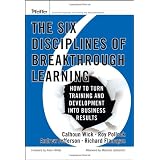
The Six Disciplines of Breakthrough Learning: How to Turn Training and Development Into Business Results Review"What if we train our employees and they leave?" To which noted leadership consultant Mark Sanborn replies, "What if we don't and they stay?" Learning agility (the ability to learn, unlearn and relearn rapidly) has become one of the most critical survival skills for both individuals and companies.Based on years of research, this book identifies the six disciplines that characterize breakthrough learning. The book provides a road map for optimizing the business impact of leadership and management training. The authors say that the essential goal of every training program should always emphasize improved performance. Learning creates value only when it is transferred and applied to the participant's work environment. Ultimately, every program must produce a positive financial return, directly or indirectly. The organization as a whole will benefit more if its employees exit the program doing several things well instead of a number of things poorly. Thus, trainees must be given the opportunity to practice their newly acquired skills. It is not sufficient for the instructor to simply talk about them. A hand on approach is more beneficial and enduring than merely lecturing. The authors suggest allowing participants time to practice their new knowledge, reflect on lessons learned, and write down how they intend to apply their new knowledge. "New insights and skills must be recalled before they can be adapted and applied," the authors say. "We are able to remember new information when it is associated with or linked to existing ideas, patterns and knowledge already stored in long-term memory. To forge these links, participants must be given sufficient guidance and enough time to reflect on what they have learned." Fred Harburg, senior vice president of leadership and management development at Fidelity Investments, puts it this way: "We are not in the business of providing classes, learning tools or even learning itself. We are in the business of facilitating improved business results."
In a nutshell, here are the six disciplines of breakthrough learning:
1.Define Business Outcomes: Agree on definition of success. Define what participants will do differently and better. Always ask yourself, "what is the benefit of this training program to the company? Be proactive in areas in which learning and development could contribute.
2.Design Complete Experience: Include what happens before and after the classroom. Redefine the finish line from the end of class to the generation of results. Be vigilant for mixed messages--where what is taught in the program and what is practiced in the business are inconsistent or where one phase does not support another. Such inconsistencies discourage participants from trying to transfer their knowledge and, if glaring, lead to cynicism. Devise systems to hold line managers accountable for their role in getting results from learning and development. Be certain that what management say, what managers do, and what the system rewards are in alignment. If not, you are wasting the time and money being invested in learning and development.
3.Deliver for Application: Show how the content relates to current business issues. Give participants time to reflect on how they will apply what they have learnt. Review the objectives that participants set for themselves. Include questions on the end-of-course evaluations to assess the extent to which participants understand the relevance, utility, and value of what they learned and whether they feel confident that they know how to use the course content in their work. Ask two fundamental questions about each program component: Will the value be obvious to participants? Will they know how and when to use what they learn?
4.Drive Follow-Through: Actively manage the process. What is your organization doing to drive learning transfer? Are managers actively involved in supporting learning transfer? Work with management to ensure that follow-through happens. Ensure accountability. Either you are part of the solution or you are part of the problem.
5.Deploy Active Support: Provide ongoing support from facilitators, coaches, managers. Provide practical "how-to" guides to facilitate transfer. Compare where you are spending resources to where the most value is created. Are they proportional? Interview a sample of participants three months after a learning or development program. Find out where they have achieved success and what factors supported their efforts. Maximize these in subsequent iterations. Identify the barriers that impeded their progress or worked against learning transfer and application. Present your findings to management with a plan for how to address them.
6.Document results: This is critical to demonstrate the value of all the effort and investment that has gone before. Report results to management and use to market the program. Review the evidence you have currently to illustrate that learning and development contributes to business success. Can you make a compelling case for the economic value added that learning and development provides? Can you convincingly demonstrate why reducing the investment will hurt the company's long-term performance? Be proactive. Begin to build multiple lines of evidence of value. If you wait until you are asked, it will be too late. If you have a great story to tell about the value you create, you cannot be shy and hope people will notice. If you believe it, you have to sell it.
Leaders who don't follow up don't improve! The major challenge faced by managers is not understanding the practice of leadership, it is practicing their understanding of leadership. One golden nugget the authors convey is that the last item on most agendas reads "Program Ends" or "Adjourn." A better ending would be: "Begin Transfer and Application."
The Six Disciplines of Breakthrough Learning: How to Turn Training and Development Into Business Results Overview
Want to learn more information about The Six Disciplines of Breakthrough Learning: How to Turn Training and Development Into Business Results?
>> Click Here to See All Customer Reviews & Ratings Now

0 comments:
Post a Comment