Average Reviews:

(More customer reviews)Are you looking to buy Working with Emotional Intelligence? Here is the right place to find the great deals. we can offer discounts of up to 90% on Working with Emotional Intelligence. Check out the link below:
>> Click Here to See Compare Prices and Get the Best Offers
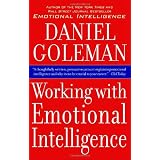
Working with Emotional Intelligence ReviewSince the publication of Daniel Goleman's first book, Emotional Intelligence he has generated a remarkable industry around the topic. In this book from 2000, Goleman applies the ideas of his previous book to the workplace. Why should executives bother with this soft stuff? According to research cited by Goleman (see the summary in Appendix 2) almost all of the abilities that distinguished stars from average performers were emotional competencies. While pattern recognition and "big picture" thinking were correlated with outstanding performance, cognitive abilities in general - above a certain threshold - did not have significant correlation. "Emotional intelligence" refers to a set of competencies that characterizes how people manage feelings, interact, and communicate. Building on previous work by others, Goleman characterizes emotional intelligence as being founded on five personal and social competencies: Self-Awareness, Self-Regulation, Motivation, Empathy, and Social Skills. Each of these five is further analyzed into 12 personal and 13 social competencies such as Accurate Self-Assessment, Self-Control, Initiative, Developing Others, Influence, Conflict Management, and Building Bonds.Unlike IQ, we can continue to improve emotional intelligence. Working With Emotional Intelligence is not a how-to book in the usual sense. It will help any executive understand the importance of EI in all its diverse aspects as well as showing examples of strong and weak EI in individual and organizational contexts. Improving is not easy work. Goleman explains the neurological basis of much of EI, including the role of the amygdala (which can make us impulsive and which affects our resilience under stress) and its interaction with the prefrontal lobes (which together also affect the ability to adapt to change), and the role of the catecholamines adrenaline and noradrenaline (which allow us to distinguish good stress from bad stress). Goleman looks at "empathic design" (p.139ff) and the contagious effects of emotions on groups, among other important applications in the workplace. He also provides a three-page list of "Guidelines for Emotional Competence Training". Although parts of Working With Emotional Intelligence will strike you as the obvious dressed up with stories, you can extract some important information by scanning through this book. In an age of record levels of job stress (according to an October 2002 study), any words of wisdom on this subject deserve a hearing.Working with Emotional Intelligence Overview
Want to learn more information about Working with Emotional Intelligence?
>> Click Here to See All Customer Reviews & Ratings Now

0 comments:
Post a Comment