Average Reviews:

(More customer reviews)Are you looking to buy Enterprise Risk Management: Today's Leading Research and Best Practices for Tomorrow's Executives (Robert W. Kolb Series)? Here is the right place to find the great deals. we can offer discounts of up to 90% on Enterprise Risk Management: Today's Leading Research and Best Practices for Tomorrow's Executives (Robert W. Kolb Series). Check out the link below:
>> Click Here to See Compare Prices and Get the Best Offers
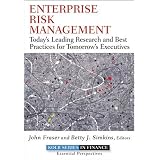
Enterprise Risk Management: Today's Leading Research and Best Practices for Tomorrow's Executives (Robert W. Kolb Series) ReviewA new book on Enterprise Risk Management (ERM) has arrived in a rapidly filling field. What should we make of it? Is it a threat (i.e. does it only muddy the already turbulent waters after putting a charge on our wallets and bookshelves) or is it an opportunity (i.e. something that is good for the growth of the discipline and its practitioners)? Is it minor league, major league or world champion?Quantitatively, it has two editors, Betty J. Simkins, a US business and finance academic, and John Fraser, a Canadian senior executive practitioner. It runs 577 pages which includes a comprehensive index and contains 26 chapters, written by 30 contributors and several panellists. It is divided into six parts (Overview; ERM Management, Culture and Control; ERM Tools and Techniques; Types of Risk; Survey Evidence and Academic Research; Special Topics and Case Studies) and features a convenient chapter format comprising of an argument, conclusions, notes and references.
According to the book's subtitle: Today's Leading Research and Best Practices for Tomorrow's Executives, it is intended to be read by up-and-coming managers with their sights set on the C-Suite. I would broaden that audience to experienced practitioners, curious students of all organizations, and academics who have an interest in this fascinating and often misunderstood discipline.
Qualitatively, it is honest, unpretentious and well written and edited, qualities that are not always honoured in the field of managing risk. Moreover, with almost three dozen perspectives (including the panellists) you can be assured that you are not being inflicted with only one person's opinion. As a keen student of risk management, I appreciated the nicely balanced approach - a nuanced blend of concepts and practice - which passes from the contributors through the skilful hands of the two editors. I particularly liked the emphasis on risk culture - and not just the usual nostrums about "the tone at the top" or "management buy-in". I have come to gag at those facile clichés and will take a full star off any review of books that rely on them. In several chapters dedicated to organizational culture, the contributors dig below the popular veneer to penetrate one of the most challenging prerequisites of ERM - a healthy, coherent and robust organizational attitude and ethic towards risk. Of course, there is always more to drill, but this is at least a credible insight beyond the penetrating insights into the obvious that so often ricochet around ERM conference halls.
Although I thought I'd seen them all, I also appreciated that a number of useful tools were laid on the table. To be sure, there is a point to be mooted here and a claim to be challenged there. For example, the notion of risk appetite and tolerance, while treated by several contributors at length, leaves the reader wondering why such an important subject has never been able provoke a consistent definition, let alone treatment by practitioners. These quibbles aside, the scope of topics addressed here is impressive, spanning lofty and arcane topics like strategy, finance and reputation, as well as gritty techniques like running risk assessment workshops and plotting the results. Midway through the book, there are some pithy risk management insights from Warren Buffet that many investors would agree is worth the price of the book alone.
Like all worthwhile books, this one is best read critically, reflected deeply upon and discussed thoroughly with knowledgeable or interested colleagues. To be sure, risk management is risky - that is to say, mishandled like any tool, machine or weapon, it will likely hurt you and others. Understand and embrace its principles and respect its limitations and risk management can be an intriguingly wise counsellor. This book is an excellent investment for anyone who cares deeply about the risks to their organization. Perhaps some of the executives who are in jail or facing prosecution for mismanaging their enterprise risks will find it offers advice too late in the game to make any difference. For the rest of us, this book can provide useful prescriptive advice that might otherwise take a lifetime of costly trial and error to acquire. In my view, it is a first class job and well worth the price.
Enterprise Risk Management: Today's Leading Research and Best Practices for Tomorrow's Executives (Robert W. Kolb Series) Overview
Want to learn more information about Enterprise Risk Management: Today's Leading Research and Best Practices for Tomorrow's Executives (Robert W. Kolb Series)?
>> Click Here to See All Customer Reviews & Ratings Now

0 comments:
Post a Comment